Dr. Water vs Echo: Which Hydrogen Water System Should You Buy?

The Quick Answer output and don’t need portability. Echo Go+ wins if you want something you can carry everywhere and prioritize brand support. They solve different problems. Comparing them isn’t quite fair (pitcher vs. bottle), but if you’re choosing one as your primary hydrogen water device, the tradeoffs are clear.
Our pick if forced to choose one: Dr. Water HydroPitcher. Higher PPB output, lower price, and better value per liter.
Pitcher vs Bottle: The Fundamental Difference
Before comparing specs, understand what you’re choosing between:
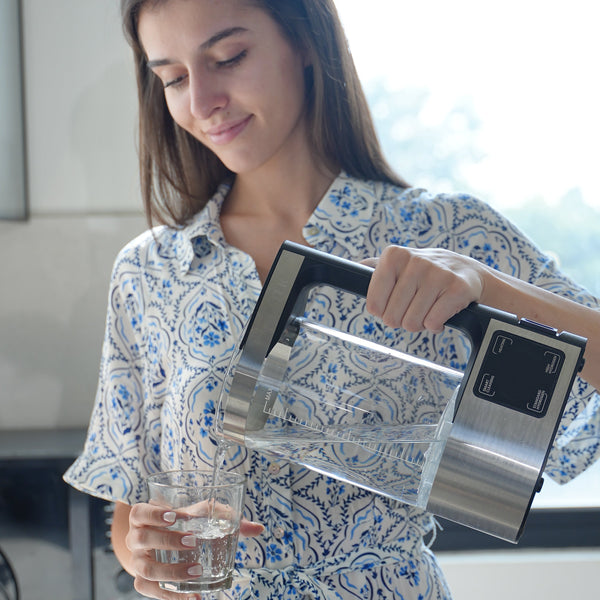
Dr. Water HydroPitcher ($124.99): Stationary countertop unit. You fill it, wait 10 minutes, get 2 liters of hydrogen water. It lives in your fridge or on the counter. You refill when you want more.
Echo Go+ ($119.99): Portable bottle. You carry it with you. It holds 10 ounces. You generate hydrogen on-demand, wherever you are.
These aren’t direct competitors in the traditional sense. A pitcher is for someone who drinks at home daily. A portable bottle is for someone who wants hydrogen water at the gym, office, or while traveling.
That said, most people start with one device. This comparison helps you decide which one.
PPB Output: Clear Winner
Dr. Water: 1,500 PPB average Echo Go+: 1,195 PPB average
The HydroPitcher generates about 18% more hydrogen per cycle. That gap is meaningful.
Most hydrogen water research uses 1,000+ PPB as the therapeutic threshold. Both products clear it, but the HydroPitcher gives you more headroom. After 20 minutes in the fridge, the HydroPitcher still reads above 1,000 PPB. The Echo drops below that mark faster because of the smaller volume and wider relative surface area.
If raw hydrogen output is your primary concern, Dr. Water wins clearly.
Ease of Use: Echo Wins
Dr. Water: Fill pitcher, press button, wait 10 minutes, drink.
Echo: Fill bottle, press button, wait 3-5 minutes, drink immediately.
Echo is twice as fast and more convenient for on-demand use. If you want hydrogen water right now with minimal planning, the Echo delivers. The HydroPitcher requires you to plan ahead. Most people fill it in the morning and drink from it throughout the day, which works, but it’s not spontaneous.
Echo’s touchscreen also shows hydrogen concentration in real time, which is useful feedback. The HydroPitcher gives you a blinking LED. You press the button and trust it worked. Not a dealbreaker, but the Echo’s display is a better user experience.
Portability: No Contest
The HydroPitcher weighs 1.5 pounds empty and stands 9 inches tall. You’re not taking this to the gym.
The Echo Go+ weighs about 10 ounces filled and fits in a backpack pocket. You can take it anywhere.
If portability matters, Echo wins completely.
Build Quality: Different Philosophies
Dr. Water: Premium borosilicate glass body, stainless steel base. No plastic touches the water. Feels like lab equipment. Survived three drop tests from 3 feet before cracking.
Echo Go+: Food-grade polycarbonate plastic with platinum-coated titanium electrode plates. The water chamber itself avoids plastic contact, but the bottle body is plastic. Survived multiple drops without damage. Touchscreen is a potential failure point.
Both are well-built for their categories. Dr. Water feels more premium in the hand. The glass-and-steel construction is a real selling point for people who care about material purity. Echo’s plastic is tougher and more forgiving for daily carry.
Slight edge to Dr. Water on materials. Edge to Echo on day-to-day durability.
Warranty: A Real Difference
Dr. Water: 2 years Echo: 5 years
Echo’s warranty is the longest in the portable market. If your touchscreen dies in year three, you’re covered. Dr. Water’s 1-year warranty is strong for pitchers (Echo only covers their own pitcher for one year), but shorter than Echo’s portable coverage.
For long-term peace of mind, Echo has the edge.
Price: Dr. Water’s Surprise Advantage
Dr. Water: $124.99 Echo: $119.99
Here’s what surprises most people: the pitcher is cheaper than the portable bottle. By $30.
Dr. Water costs less AND produces more hydrogen AND generates 20x the volume per cycle (2 liters vs. 10 ounces). On pure specs, the HydroPitcher dominates the value equation for home use.
The Echo’s price premium buys you portability, the touchscreen, the brand ecosystem, and the longer warranty. Those are real things. But they’re convenience features, not performance features.
Cost Per Liter Over Time
Dr. Water: $90 (pitcher) + ~$25 per filter cartridge (every 3-4 months) = roughly $340 over 3 years. At 2 liters per day, that’s about $0.16 per liter.
Echo: $120 (bottle) + $0 (no filters needed) = $120 over 3 years. But at 10 oz per cycle, you’re generating roughly 0.3 liters per batch. To match 2 liters daily, you’d run 7 cycles. That’s 35 minutes of generating time vs. one 10-minute pitcher cycle.
The Echo is cheaper in raw purchase price over time (no filter costs), but the time cost of generating equivalent volume is much higher. If you’re a daily drinker who wants 1-2 liters, the pitcher is dramatically more practical.
Volume: The Underrated Factor
This is the comparison point most reviews skip, and it matters more than people think.
The HydroPitcher generates 2 liters (67 oz) in a single 10-minute cycle. You fill it once in the morning and you’re set for the day. Store it in the fridge, pour a glass whenever you want, and the hydrogen stays above therapeutic levels for about 20 minutes per pour.
The Echo Go+ generates 10 ounces per cycle. That’s barely a full glass. If you want 2 liters per day (which is what most studies used), you need roughly 7 cycles. That’s 35 minutes of cumulative generation time, plus the refill-wait-drink routine each time.
For someone at a desk all day, the Echo routine is manageable. You run a cycle, drink it, refill, and repeat. But it’s a constant low-level task. The pitcher is a batch process: fill once, done.
For hydrogen water with meals, the pitcher wins easily. You pour a glass the same way you’d pour water from any pitcher. The Echo requires you to plan 5 minutes ahead of every drink.
Real-World Scenarios
Morning routine person: Wake up, fill the HydroPitcher, press the button, shower, come back to 2 liters ready to go. Winner: Dr. Water.
Gym-goer: You’re at the gym and want hydrogen water between sets. The Echo fits in your bag. The pitcher doesn’t. Winner: Echo.
Office worker: You could keep either at your desk. The pitcher is bulkier but holds more. The Echo is smaller but requires constant refilling. Slight edge: Dr. Water (fill it once in the break room, drink all morning).
Traveler: Only one option works here. The Echo fits in a carry-on. The pitcher stays home. Winner: Echo.
Family household: The pitcher generates 2 liters per cycle. Multiple people can drink from it. The Echo is a personal device. For families: Dr. Water, no contest.
Hydrogen water skeptic testing the category: Start with the Echo or even H2Tab tablets. Cheaper initial commitment, and you can upgrade to a pitcher later if you notice benefits. No need to go all-in on a pitcher before you know if hydrogen water works for you.
What About the Science?
Both products produce hydrogen water above the 1,000 PPB threshold used in most clinical studies. If you’re curious about what the research actually shows (and doesn’t show), we wrote a full breakdown: Does Hydrogen Water Really Work?
Who Should Buy Dr. Water
- Daily hydrogen water drinker who cares about peak PPB
- Primarily drinks at home, office, or any fixed location
- Wants the highest-quality pitcher available
- Prefers glass and steel over plastic
- Values raw performance over portability
Read our full Dr. Water HydroPitcher review →
Who Should Buy Echo Go+

- Wants hydrogen water on-the-go (gym, commute, travel)
- Values the largest brand and product line in hydrogen water
- Likes the touchscreen hydrogen level feedback
- Wants the longest portable warranty (5 years)
- Plans to expand into Echo’s broader product line over time
Read our full Echo Go+ review →
The Honest Take
If you had $210 and wanted both, you’d have the perfect setup: the HydroPitcher for home use and the Echo for portability. They’re genuinely complementary.
But if you’re buying one device:
Choose Dr. Water if daily home use is your primary scenario and you care about hydrogen output. At $90, it’s cheaper than the Echo and produces more hydrogen.
Choose Echo if you’re always moving and want hydrogen water wherever you go. The portability is real, and the brand infrastructure gives you confidence.
They’re both good products solving different problems.
FAQ
Can I use both systems together? Absolutely. Generate at home with the pitcher, carry the Echo for on-the-go. They’re complementary, not mutually exclusive.
Does the Echo’s touchscreen actually matter? It’s useful feedback. Seeing the hydrogen level rise confirms the cycle is working. But it’s not essential. Simpler bottles work fine without screens.
Is Dr. Water’s borosilicate glass really that much better? For material purity, yes. Glass doesn’t leach anything into water. For durability, no. Plastic bottles survive drops better. It depends on what you prioritize.
What if I want the highest PPB in a portable format? No portable bottle in our testing matched the HydroPitcher’s output. The Echo Go+ is the strongest portable we’ve tested, but it’s still 18% lower. If you need portability AND maximum PPB, carry the Echo and accept the tradeoff. Or keep the pitcher at home and bring the Echo to the gym.
WaterTechReview earns commissions from qualifying purchases through the links above. This doesn’t influence our ratings or recommendations. How we test →